

AI Can Scale Career Coaching — If We Lead It Ethically
- Phil Jarvis

- Mar 24
- 3 min read

We are on the edge of a profound shift in how people access career guidance. For decades, high-quality career coaching has been unevenly distributed—often limited by geography, funding, and availability of trained professionals. Many young people make life-shaping decisions with little more than fragmented information and occasional advice. Now, for the first time, AI makes it possible to scale personalized career support to everyone.
But here’s the critical question: Will we use AI to strengthen career development as essential infrastructure—or allow it to become just another source of noise and inequity?
The Promise: From Scarcity to Universal Access
AI can fundamentally change the equation. It can:
Provide 24/7, on-demand guidance
Help students explore pathways aligned with their interests and strengths
Translate complex labour market information into understandable options
Support ongoing reflection, not just one-time decisions
Extend the reach of career professionals, not replace them
In short, AI can help shift career development from a limited service to a universal public good. This is especially powerful for students and families who have historically had the least access to networks, mentors, and guidance.
The Risk: Scaling Misinformation and Bias
But scale cuts both ways. Without thoughtful design and stewardship, AI can:
Reinforce existing biases in labour market data
Narrow rather than expand perceived options
Provide generic or misleading advice
Prioritize efficiency over human meaning and purpose
In other words, we could scale the very problems we are trying to solve.
The Principle: Stewardship Over Novelty
This is not a technology problem. It is a leadership challenge. If career development is truly nation-building infrastructure, then AI must be guided by a clear public-interest framework:
Equity first — ensure all learners benefit, not just the already advantaged
Human-centred design — AI supports conversations, not replaces them
Transparency — users understand how suggestions are generated
Accountability — outcomes are monitored and improved over time
Alignment with real-world exposure — AI complements, not substitutes, human experience
This is where governments, educators, employers, and communities must act—not as controllers, but as stewards.
The Opportunity: Augmenting, Not Replacing, Humans
The most powerful model is not AI instead of people. It is AI alongside people.
Imagine:
A student has a 30-minute career conversation at school
AI follows up with personalized exploration pathways
A parent continues the conversation at home
An employer shares real-world insight
A career professional provides guidance at key moments
This is how we build career ecosystems, not isolated interventions.
A Defining Moment
AI is now the most powerful labour market information system ever created. But information alone has never been enough. What matters is how people interpret, experience, and act on that information.
That is the work of career development. And that is why this moment matters so much.
The Bottom Line
We don’t need to ask whether AI will shape career development. It already is. The real question is whether we will: Lead it intentionally… or react to it too late.
If we lead well, AI can help us do something we have never achieved before: Ensure that every young person—not just the fortunate few—has access to the guidance, exposure, and support they need to build a meaningful future.
That is not just a technological opportunity. It is a nation-building imperative.
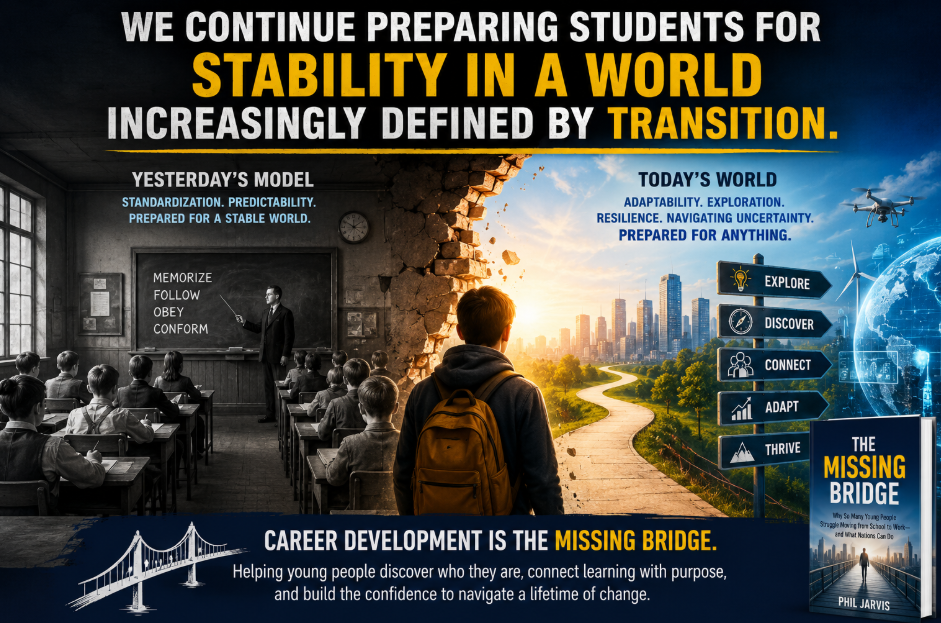
AI was used in developing this blog and generating the image.
The ideas, insights, and perspectives are mine.


Great article! Floating shelves are honestly one of the best décor ideas for modern homes. I recently added a few in my kitchen, and they’ve made storage so much easier. Plus, they look super elegant. Thanks for sharing these creative ideas—very useful!