

WHAT IF CAREER DEVELOPMENT WERE TREATED LIKE PUBLIC INFRASTRUCTURE?
- Phil Jarvis

- 4 hours ago
- 2 min read

We would never spend years designing and building an international bridge, and then simply walk away from it. The Gordie Howe International Bridge between Windsor and Detroit offers a timely example. Its construction is complete, but its stewardship is only beginning. The agreement includes 30 years of operation, maintenance, and rehabilitation.
Why? Because essential infrastructure must remain safe, effective, and responsive to changing needs.
We understand this principle when the infrastructure is visible. We continuously maintain highways, hospitals, schools, energy systems, and broadband networks. We do not discard them because a new government takes office, a funding agreement expires, or someone wants to introduce a newly branded alternative. We preserve what works, repair what is deteriorating, and improve what changing circumstances require.
Career development should be treated with the same seriousness. Young people need reliable pathways connecting education with further learning, work, and meaningful adult lives. Adults need help navigating technological disruption, industry transformation, displacement, caregiving responsibilities, and longer working lives. Employers need better ways to connect with emerging talent. Communities need people who can see where their abilities and aspirations might contribute.
Yet effective career development initiatives are too often created as temporary projects. They are piloted, celebrated, and then abandoned when funding ends or leadership changes. Years later, someone starts over, often rebuilding something remarkably similar under a new name. Imagine if we treated the Trans-Canada Highway, or the Trans Mountain Pipeline, or any other nation building project that way.
Career development infrastructure would not be a single program, platform, or curriculum.
It would be a connected, continuously improving system of:
• career learning throughout education
• meaningful encounters with employers and working adults
• accurate career and labor-market information
• trained career development professionals
• accessible guidance during every major transition
• shared standards, evaluation, and long-term stewardship
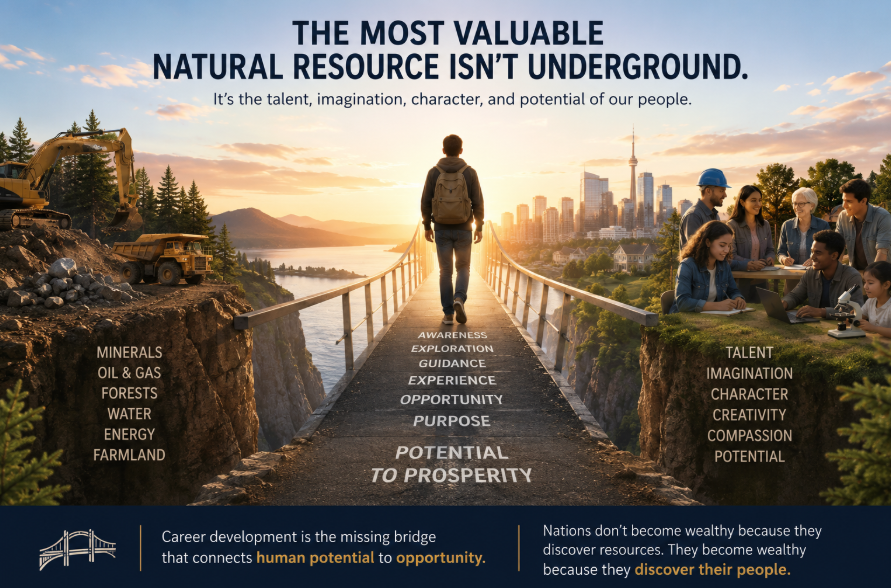
Like the Gordie Howe International Bridge, this infrastructure would connect people with opportunity. It would strengthen productivity, reduce the waste of human potential, support social mobility, and help communities adapt to economic change.
Most importantly, it would not be discarded on a whim. It would be maintained, evaluated, renewed, and improved, generation after generation. This is becoming one of the defining ideas of my new book, The Missing Bridge. Career development is not a temporary intervention for people who are struggling. It is essential public infrastructure from which everyone benefits.
It is time we began building, and stewarding, it accordingly.


Comments